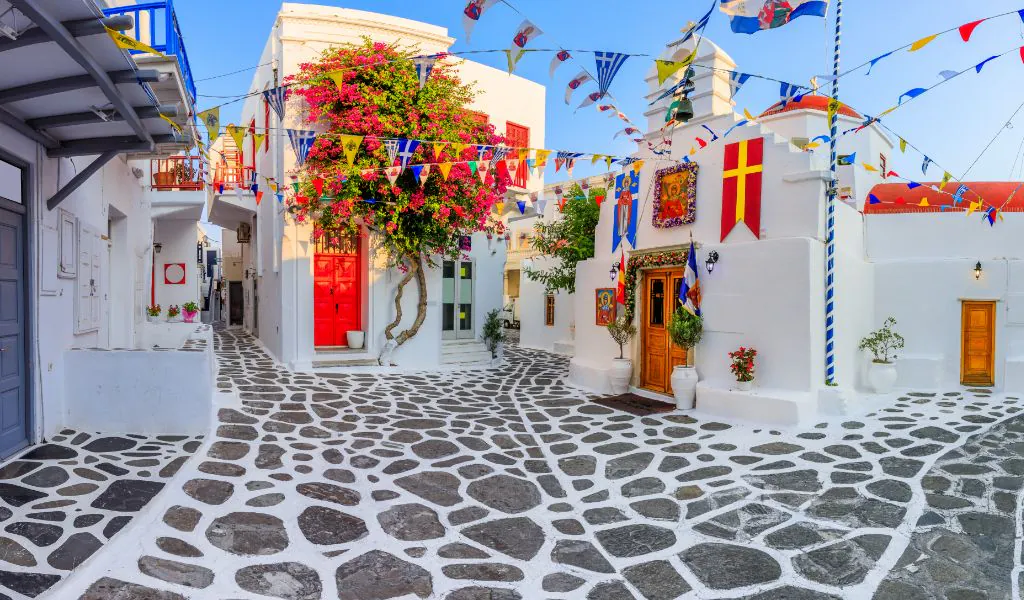
Celebrating Greek Easter in Mykonos: A Journey of Tradition and Renewal
Greek Easter is a time of profound significance for Greeks, a period where faith, culture, and community come together in a vibrant celebration of life’s renewal. The island of Mykonos, with its timeless beauty, becomes a magical backdrop for these age-old traditions. Here, amidst the whitewashed buildings and sparkling Aegean waters, Easter is not just a religious observance—it is an experience of devotion, joy, and rebirth.
The Heart of Greek Easter: Tradition and Faith
For the people of Mykonos, Easter marks the culmination of Lent, a period of fasting, reflection, and spiritual preparation. On Holy Week, beginning with Palm Sunday, the island’s churches come alive with the sights and sounds of Greek Orthodox rituals. As you walk through Mykonos Town, the scent of incense wafts through the air, and the peal of church bells reverberates, signaling the sacredness of the season.
One of the most moving moments of Holy Week is Good Friday. On this day, the island’s faithful gather for the Epitaphios, a solemn procession commemorating Christ’s burial. The streets of Chora become a sea of candlelight, as men and women in dark, somber clothing follow the decorated bier, known as the Epitaphios. The sight is powerful, accompanied by hymns that echo across the narrow alleys, reminding all who are present of the island’s deep-rooted connection to faith and tradition.
Holy Saturday: A Moment of Transformation
The Paschal Vigil on Holy Saturday night marks the most sacred moment of the Greek Easter celebration. Mykonos’ churches are filled with congregants, each holding a candle, eagerly awaiting the arrival of the Holy Fire. The moment when the priest announces “Christos Anesti” (Christ is Risen) rings out, and the entire congregation responds with a joyful “Alithos Anesti” (Truly, He is Risen).
In Mykonos, the streets surrounding the churches are filled with the glow of candles, their light dancing against the night sky. It’s a time of collective celebration, of hope and renewal, where people hug and share wishes of Kalo Pascha (Happy Easter) with friends, family, and even strangers.
Easter Sunday: Feasting, Family, and Festivities
The arrival of Easter Sunday brings with it a feast that symbolizes the end of fasting and the joyous resurrection of Christ. It’s a day filled with food, music, and laughter as families come together to celebrate. On the island, the traditional lamb on the spit takes center stage. The rich aroma of roasting lamb fills the air, mingling with the fresh sea breeze. The dish, often served with tsatsiki, salads, and sweet bread (tsoureki), brings a sense of togetherness and abundance.
In addition to the traditional dishes, red-dyed eggs play a special role. The cracking of the eggs is a fun and symbolic game, where each person attempts to crack the egg of another while their own remains intact, symbolizing the breaking of Christ
Ρώτα το ChatGPT