

The Mykonian Panigyri: A Celebration of Faith, Community, and Tradition
Amid the cosmopolitan charm and world-renowned nightlife of Mykonos lies a more traditional, heartfelt rhythm—the Mykonian Panigyri. These local religious festivals, celebrated with music, dance, food, and devotion, offer a glimpse into the island’s true soul. Far from the glitz of beach clubs and celebrity sightings, the Panigyria (plural of Panigyri) are time-honored gatherings that connect the people of Mykonos to their roots, their saints, and one another.
What is a Panigyri?
A Panigyri (πανηγύρι) is a Greek Orthodox religious feast held in honor of a saint, typically celebrated on the saint’s feast day. Though common throughout Greece, on Mykonos these festivals carry a unique charm shaped by the island’s Cycladic culture and strong sense of community.
Each Panigyri is typically hosted by a local chapel or monastery and often sponsored by a “panigiras”—a volunteer or family who takes on the responsibility of organizing and funding the event as an act of faith and gratitude. The celebrations begin with a religious service, followed by a feast and traditional music and dancing that can last well into the early hours.
Faith and Hospitality
At the heart of every Mykonian Panigyri is Orthodox Christian faith. The day begins with a liturgy or vespers service, attended by locals and visitors alike. The sacred icon of the saint is often displayed or even paraded around the chapel, invoking blessings and protection for the community.
But faith in Mykonos is deeply intertwined with filoxenia—Greek hospitality. After the service, everyone is invited to join in a communal meal, usually featuring roasted lamb or goat, local cheeses like kopanisti, handmade pies, olives, and plenty of local wine or souma (a strong Mykonian spirit).
Music, Dance, and Kefi
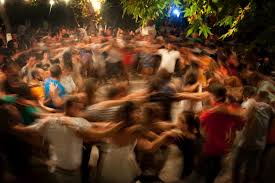
When the sun begins to set, the true spirit of the Panigyri shines. Traditional musicians play live Cycladic folk music, featuring instruments like the violin, laouto (lute), and tsampouna (a type of bagpipe). Locals take to the floor in lively circular dances such as the ballos and syrtos, often joined by visitors caught up in the festive energy.
There is an undeniable sense of kefi—a Greek word that embodies joy, passion, and spirit. Elders pass down steps to younger generations, while children run around freely. Laughter and song echo through the villages or monastery courtyards under the stars.
When and Where to Experience a Mykonian Panigyri
Panigyria take place throughout the year, but the most vibrant are held during the summer months. Some of the most notable on Mykonos include:
- July 26 – Feast of Agia Paraskevi, one of the most important Panigyria on the island, held in Chora.
- August 15 – The Dormition of the Virgin Mary (Panagia), celebrated across Greece but especially fervently in the Ano Mera Monastery.
- September 8 – Nativity of the Virgin Mary, with festivities in many smaller chapels across the island.
Each festival has its own character and local traditions, but all share the same core values: community, devotion, and joyous celebration.
A Living Tradition
Though tourism has transformed much of Mykonos, the Panigyria remain resilient, cherished by locals and increasingly appreciated by visitors seeking authenticity. They are more than religious events—they are living traditions, where generations gather to honor their past and celebrate their shared identity.
For those visiting Mykonos who want to go beyond the beaches and boutiques, attending a Panigyri is an unforgettable experience. It’s a reminder that beneath the glamorous surface lies a rich cultural heart, still beating in time with the music of the Cyclades.
